
Comparing Gentrification and Suburbanization in Terms of Socioeconomic Impact
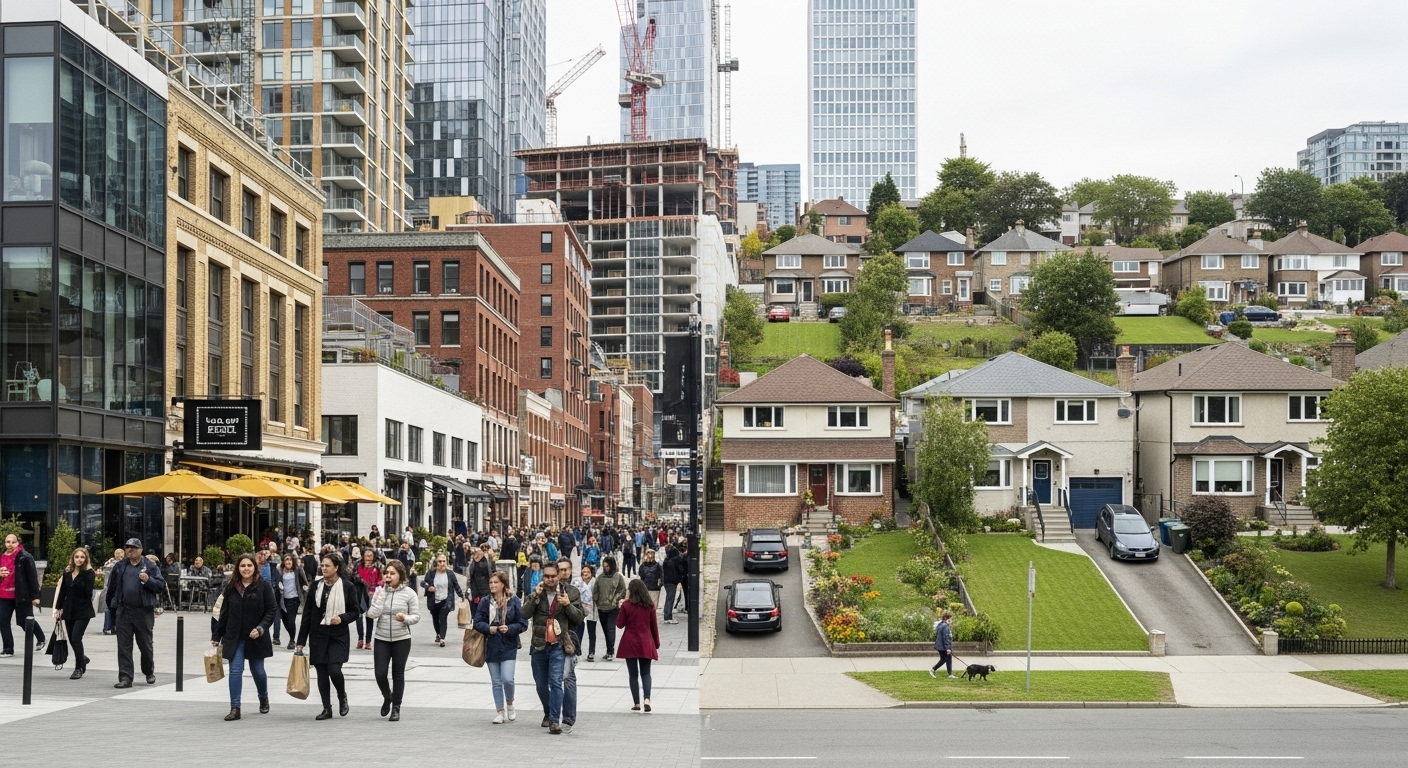
Introduction: Two Paths, One Outcome, Unequal Cities
Cities do not change by accident.
They change because people make choices about where to live, who belongs, and what is worth protecting.
When we compare gentrification and suburbanization in terms of socioeconomic impact, we are examining two major forces that reshape society. Both affect wealth, housing, education, jobs, race, and opportunity. Both create winners and losers. And both reveal how human awareness, fear, and aspiration shape our understanding of space.
At first glance, these processes look very different. One happens inside cities. The other happens outside them. However, when viewed through a socioeconomic lens, they share a common outcome: unequal access to resources and power.
Understanding this comparison helps students, planners, and everyday citizens see how economic decisions ripple through generations.
Clear Definitions First
What Is Gentrification?
Gentrification occurs when higher-income individuals and investors move into historically lower-income urban neighborhoods. As new money enters the area, housing costs rise, businesses change, and long-term residents face growing pressure to leave.
Key characteristics:
- Rising rent and property values
- New businesses aimed at wealthier consumers
- Cultural shifts in food, art, and public space
- Displacement of long-term residents
Gentrification often begins with promises of renewal but ends with loss of stability for vulnerable groups.
What Is Suburbanization?
Suburbanization refers to the movement of people, businesses, and resources from urban centers to surrounding suburban areas.
Key characteristics:
- Growth of single-family homes
- Lower population density
- Car-based transportation
- Separation of work, housing, and commerce
Suburbanization spreads cities outward while pulling wealth and opportunity away from urban cores.

Speculative Social Commentary
The Turn
By Dennis Joiner
Humanity stands at the crossroads of consciousness and control. The Turn is a striking vision of our possible future — where technology, identity, and morality collide in a world desperate for transformation.

Book About Race, Justice & Equality
Let the Playing Field
Level the Playing Field
By Dennis Joiner
A powerful, unapologetic call for awareness and change. Dennis Joiner exposes how history and systems keep the field tilted — a profound look at justice, humanity, and truth.
Why Socioeconomic Comparison Matters
Socioeconomic factors include:
- Income
- Housing
- Employment
- Education
- Health
- Social mobility
These factors shape daily life and reveal how economic decisions affect generations, not just neighborhoods.
Comparing gentrification and suburbanization shows how inequality is created, not just where it appears.
Income Distribution and Economic Inequality
Gentrification and Income
In gentrifying neighborhoods:
- Average income rises
- Wealth gaps widen
- Low-income households struggle to remain
A neighborhood may look “better” on paper, but the improvement often reflects replacement, not shared progress.
Higher-income newcomers benefit from improved services. Long-term residents face higher costs without higher wages.
Suburbanization and Income
Suburbanization pulls:
- Middle- and upper-income households
- Skilled jobs
- Tax revenue
Cities lose:
- Stable taxpayers
- Business investment
- Economic diversity
Over time, this creates a cycle where cities struggle to fund public services while suburbs accumulate advantage.
Housing: Stability vs. Displacement
A Housing Under Gentrification
Housing is the most immediate pressure point.
Effects include:
- Rent hikes
- Property tax increases
- Evictions
- Reduced affordable housing stock
Homeowners may gain equity. Renters, who are often lower-income, face forced mobility. This breaks community ties and increases housing insecurity.
According to U.S. housing studies, renters are three times more likely to move involuntarily than homeowners.
Housing Under Suburbanization
Suburban housing emphasizes:
- Homeownership
- Zoning that limits multi-family units
- Higher entry costs
This creates barriers for:
- Low-income households
- Young adults
- Minorities with limited access to credit
Suburban growth builds wealth for those who can enter while locking others out.
Employment Access and Labor Patterns
Gentrification and Jobs
Gentrification creates jobs in:
- Retail
- Hospitality
- Construction
- Personal services
However:
- These jobs often pay low wages
- Residents may not be hired
- Commutes increase for displaced workers
Economic growth exists, but access is uneven.
Suburbanization and Jobs
As jobs move outward:
- Car ownership becomes essential
- Transit access weakens
- Urban residents face longer commutes or unemployment
Transportation becomes a hidden economic filter. Those without cars lose access to opportunity.
Education and Opportunity Gaps
Education in Gentrifying Areas
Gentrification can:
- Increase school funding
- Improve facilities
- Attract new families
But:
- Long-term residents may be priced out before benefits appear
- Cultural mismatch can affect student experience
- School improvement may serve newcomers more than locals
Education in Suburban Areas
Suburban schools often benefit from:
- Strong tax bases
- Smaller class sizes
- More extracurricular resources
Urban schools may struggle due to:
- Declining enrollment
- Reduced funding
- Aging infrastructure
Education inequality reflects economic sorting, not student ability.
Health and Quality of Life
Health Effects of Gentrification
Positive changes:
- Cleaner streets
- Better food access
- Safer public spaces
Negative effects:
- Stress from housing insecurity
- Loss of social support networks
- Mental health strain from displacement
Health improves for some while worsening for others.
Health Effects of Suburbanization
Suburban life can offer:
- Lower pollution
- More green space
But also:
- Car dependence
- Less physical activity
- Social isolation
Health outcomes depend on income, access, and community design.
Race, Class, and Social Separation
Neither process is race-neutral.
Gentrification and Race
Gentrification often affects:
- Minority neighborhoods
- Immigrant communities
- Historically excluded groups
Displacement reinforces patterns where cultural identity is replaced rather than preserved.
Suburbanization and Race
Suburban growth historically favored:
- White, middle-class families
- Those with access to credit and loans
Zoning and housing policies often reinforced segregation without using explicit language.
Human Awareness and Collective Choice
Urban change reflects levels of awareness in society.
At lower levels:
- Focus is on comfort and safety
- People avoid difference
- Short-term gain dominates
At higher levels:
- Community impact matters
- Long-term stability becomes important
- Shared responsibility guides policy
Cities grow healthier when awareness expands beyond personal benefit.
Long-Term Socioeconomic Consequences
A Long-Term Effect of Gentrification
- Cultural erasure
- Displaced poverty
- Increased urban inequality
- Shortened community lifespan
Long-Term Effects of Suburbanization
- Urban decline
- Infrastructure strain
- Environmental cost
- Social fragmentation
Both shift problems instead of solving the root causes.
Key Similarities and Differences
Similarities
- Both increase inequality
- Both sort people by income
- Both reflect fear and aspiration
- Both reshape opportunity
Differences
- Gentrification concentrates wealth inward
- Suburbanization disperses wealth outward
- Gentrification displaces within cities
- Suburbanization drains cities of resources
Why This Comparison Still Matters Today
Understanding these processes helps people:
- Answer academic questions clearly
- See policy consequences
- Recognize human behavior patterns
- Advocate for fair urban growth
Cities do not fail because of change. They struggle when change lacks awareness.
Frequently Asked Questions
1. Is gentrification always harmful?
No. Investment can help communities, but harm occurs when residents lack protection and a voice.
2. Why did suburbanization grow so fast?
Government loans, highways, and housing policies made suburban life accessible for some and impossible for others.
3. Which causes more inequality?
Both do, but gentrification creates sharper inequality in shared spaces.
4. Can cities balance growth and fairness?
Yes, through affordable housing, transit access, and inclusive planning.
5. How does awareness influence urban outcomes?
Higher awareness leads to shared solutions. Lower awareness leads to exclusion.
Call to Action
If this expanded explanation helped you:
- Save it for exams or teaching
- Share it with classmates or colleagues
- Use it as a guide for urban studies discussions
Urban change is not just about buildings.
It is about people, awareness, and responsibility.
For readers who want to explore deeper discussions on social change, related insights expand on how awareness shapes society.

Dennis Joiner
Dennis Joiner, a mathematics and computer science graduate from Southern Illinois University, critiques American society through "system thinking." After a career in IT, he retired in 2016 to focus on writing and social commentary, envisioning a future free from societal pain.
0 Comments