



Photo by cookie_studio
Understanding wokeism in American politics and media is a vital task for every concerned citizen today.
Woke thinking has fundamentally changed how we talk to each other and how we view our history. While many people believe it started recently, it actually has roots that go back many decades. In the beginning, some of these ideas were about being kind and fair to people who were mistreated; however, over time, these ideas have been twisted into a tool used by powerful groups in the government and media to control how people think and behave.

Photo by benzoix
The Early Seeds of Woke Thinking
The roots of woke thinking go back many years to the early fights for civil rights and fairness in the United States. After World War II ended, America began to go through many significant changes. People across the country, especially Black Americans, wanted to have the same rights and opportunities as everyone else. This was a time of growing social consciousness.
During this period, more and more people started to notice that the American dream was not within reach for everyone in the same way.
However, as time went on, the focus shifted from solving problems to reliving them.
In The Turn, Dennis Joiner explains that while the fight for rights was necessary, it also left behind deep pain that some groups did not want to let go of: “Americans have continued to gnaw on old social wounds or injustices, reliving every detail over and over, thereby keeping them raw in their minds.“
This constant focus on the pain of the past helped start what is now called identity politics, a way of looking at people not as individuals with their own characters, but only as members of a group based on their race, sex, or background.
From the Margins to the Mainstream
For a long time, these radical ways of thinking were only found in small groups or deep inside college classrooms. Most regular people did not hear about them in their daily lives.
But slowly, over several decades, these ideas began to move into the mainstream: they started to show up in the movies we watch, the music we hear, and the news reports we read every day.
The 1960s were a massive part of this change.
During that decade, many young people began to question the traditional rules of their parents and, thus, pushed for progressive thinking that wanted to break away from the old American ways of doing things.
This shift was made possible by the people who run our news and entertainment because it was “the media’s ability to frame certain narratives [that] would have a substantial impact on we-the-people.”
By choosing which stories to tell and which ones to hide, the media helped spread a new kind of cultural awareness, taking ideas that used to be seen as strange or even wrong and making them normal.
Over time, what was once only talked about by a few people on the “margins” of society became the main message we see on television every single day.
The Rise of Social Justice Ideology
In recent years, these trends have combined to create what many have coined a social justice ideology, where the intent is no longer just about being fair or friendly to neighbors, but on a stringent system of rules about what you are allowed to say and think.
Dennis describes woke thinking as “a system of thought and behavior characterized by intolerance, policing the speech of others, and justifying one’s righteous indignation or hatred by denouncing others.“
This way of thinking has spread from schools into the highest levels of the government and even into big corporations, often following a pattern to get into our lives. First, it uses sympathy by showing us someone who is hurting. Second, it uses fear; people are afraid that if they disagree, they will be called mean names or lose their jobs. Finally, it uses force through new laws and company rules that require everyone to follow the same path.
This process has changed how our country works from the inside out.
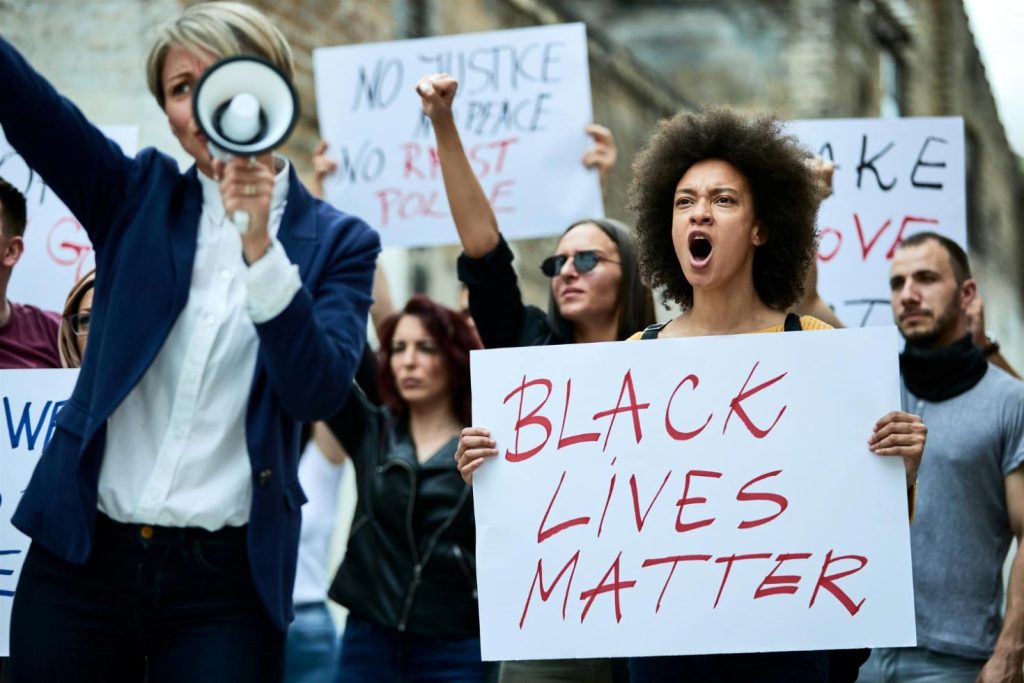
Photo by Drazen Zigic
Woke Thinking as a New Religion
Some sociologists have noticed that wokeism has started to act like a new kind of religion. Despite not talking about God, it has its own rules about “sin” and its own ways of punishing people who don’t follow the rules. Dennis associates it with being an “illiberal religion” because, unlike traditional American values, it does not allow people to have different opinions and, instead, offers what Joiner calls a “dystopian future of a society bereft of reason, truth, logic, and common sense.“
As traditional faith in God and the Bible has been pushed out of schools and public life, this new ideology has moved in to fill the gap.
Instead of looking for universal truths that apply to everyone, people are told to focus only on their group identity, leading to what Dennis calls a “moral decline.”
In this new system, right and wrong are no longer fixed rules that stay the same. Morality now changes depending on who is talking and which group they belong to.
Why This Matters for America’s Future
The spread of these ideas has made the United States very divided. Families and friends often find themselves arguing because they no longer see the world in the same way.
Many people feel that their political leaders and the people in the media no longer care about the values of regular citizens.
Instead of bringing people together as Americans, woke thinking often splits the country into “us-versus-them” groups. Dennis warns that “America’s fitness for continuance as the leader of the free world” is at risk and suggests that our country cannot stay strong if we are constantly fighting each other over these new ideas.
To stop the country from falling apart, he says we must look at our own lives first, writing that we must be “dead to sin” and “dead to greed.”
This means we need to stop following the selfish or angry messages we see on the news. We need to find our way back to absolute integrity and honesty. Only by returning to the values that made the country strong in the first place can we move forward together as one people.
If you want to understand the full story of how America changed over the last 75 years and how to see through the lies of modern politics, you should read The Turn by Dennis Joiner.

0 Comments