


Photo by freepik
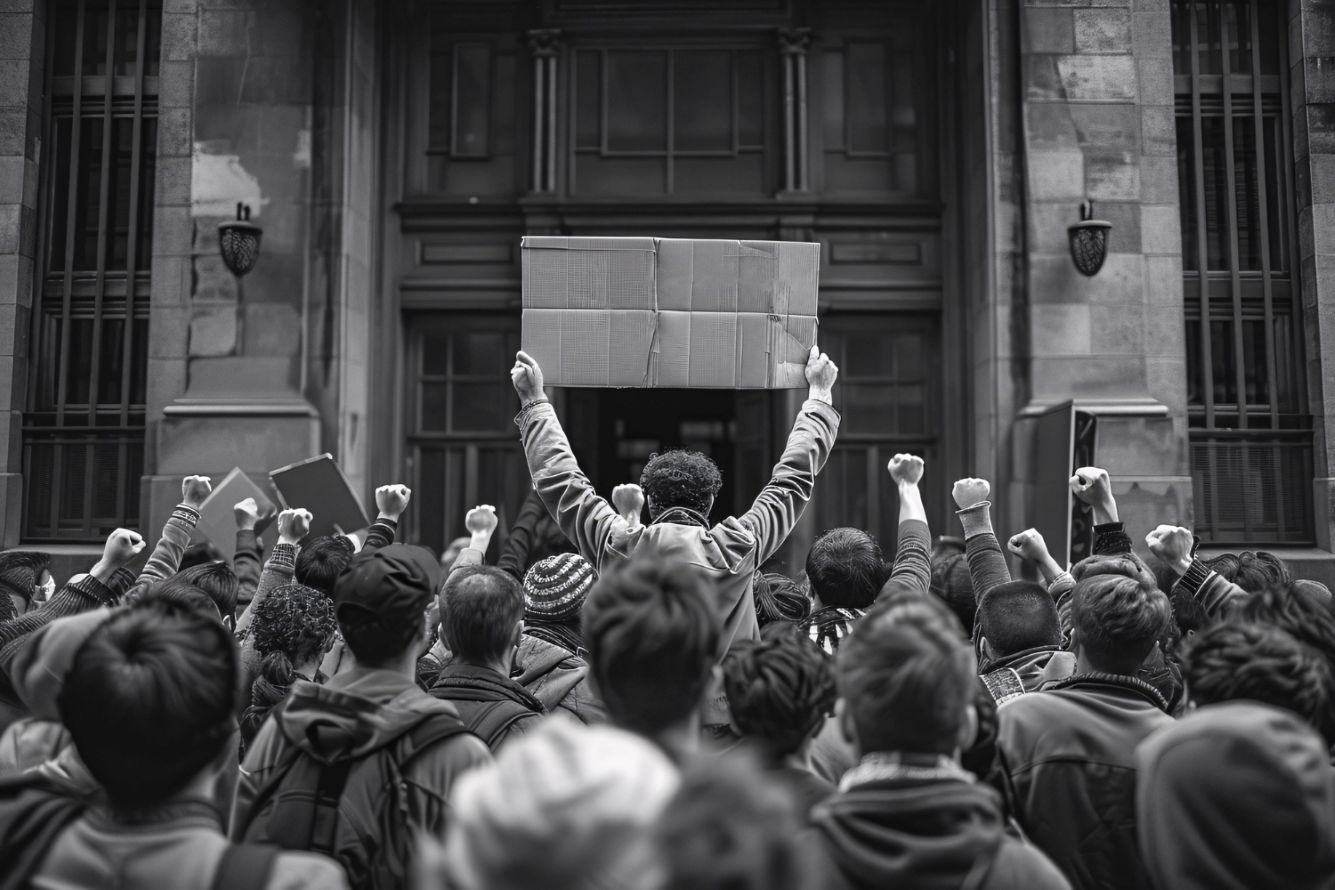
Protests happen when people feel they have no other choice. When words fail, when leaders ignore them, when nothing changes despite years of asking nicely—that is when ordinary people rise up.
The book The Turn by Dennis Joiner shows how this has played out in America for 75 years as he writes about the role of protest movements in US political shifts and how they have shaped everything from civil rights to war policy. This is the language of the unheard—the only way left for regular folks to speak when nobody will listen.
People protest because they are hurt, having lost jobs, watched their children struggle, and seen neighbors treated unfairly.
The pain accumulates until silence becomes impossible to maintain.
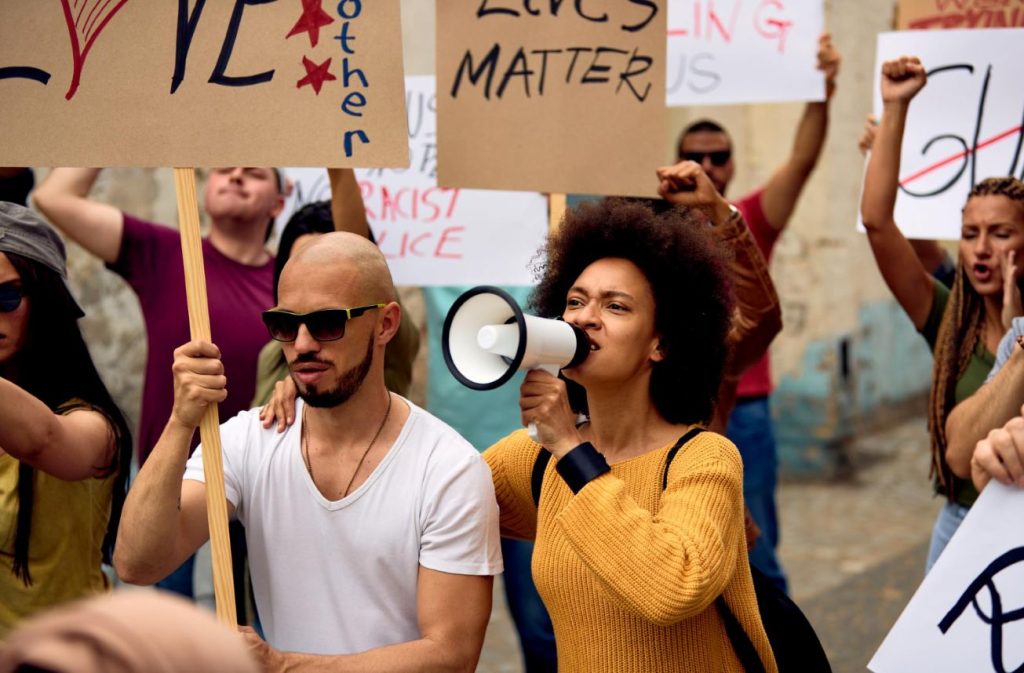
Photo by Drazen Zigic
Joiner describes these moments of disruption as coming from people who “could not escape from a miasma of discontent.” Discontent that is always ignored has nowhere to go except into the streets. Thus, protests become the voice of the oppressed when newspapers won’t print their stories, and politicians won’t answer their letters.
The silent cries for justice finally make a sound.
History teaches that those with power rarely give it up quietly. Change comes only when enough people refuse to stay quiet, when the expression of the marginalized becomes a force that cannot be ignored. Every major advance in America—shorter work weeks, voting rights, safer workplaces—came because people demanded it together.
The 1950s and 1960s: When Quiet People Got Loud
The 1950s looked peaceful on television with its happy families, new cars, and backyard barbecues. But Joiner pulls back the curtain, revealing that below the surface, “growing socioeconomic struggles” were building.
Black Americans still couldn’t vote in much of the South. They couldn’t drink from the same water fountains or send their children to the same schools. These unspoken grievances piled up year after year.
Then came Rosa Parks, who sat down on a bus and refused to move. That single act sparked a rebellion of the ignored that shook the whole country. Joiner explains that “the Civil Rights Movement was a pretext for the recognition of the country’s racial socioeconomic disparities.”
In plain words: people finally saw what had been hidden.
Television brought the violence into living rooms. Water hoses, attack dogs, beaten children—America could no longer look away.
It was at this time that Martin Luther King Jr. called protest the language of the unheard: when the levers of society block the marginalized from lifting themselves up, the street becomes the only stage to address their grievances. The rebellion of the ignored taught America that democracy requires listening to everybody, not just the rich and powerful.
Those protests changed laws, opened schools, and gave millions their first real taste of freedom.
The Vietnam War: When Young People Said No
The 1960s brought a different kind of protest as young people watched their friends get drafted and sent to die in a war nobody could explain. Joiner calls the Vietnam War “a death warrant for the young men of America.” He says they “were fighting for nothing that they could see, feel, touch or believe in.” That emptiness bred anger.
College campuses exploded, and students burned draft cards, marching on Washington and refusing to go to war for nothing.
The voice of the oppressed became a roar that presidents could not ignore. Joiner notes that the antiwar movement “effectively united millions against the war.” These were not just long-haired radicals: they were mothers, professors, veterans, and clergy. The silent cries for justice grew so loud that Lyndon Johnson chose not to run for reelection rather than face more protests.
The war eventually ended. Not because generals decided it was time, but because everyday Americans made themselves heard. The expression of the marginalized—in this case, young people sent to fight—forced the most powerful nation on earth to change course.
Protests proved they could move mountains, or at least stop bullets.
The 1970s and Beyond: New Voices, New Fights
After Vietnam, the language of the unheard spread to other groups: women wanted equal pay and control over their own bodies, while gays and lesbians refused to stay in the closet as environmentalists demanded clean air and water.
Joiner describes how “the struggle for women’s rights raged on throughout the ’60s” and beyond. Women were “living as second-class citizens in a country where everybody was supposed to be equal under the law.”
The Stonewall riots in 1969 also marked a turning point for gay rights. When police raided a gay bar in New York, patrons fought back. That rebellion of the ignored launched a movement that continues today. Joiner notes that “the Stonewall riots are frequently cited as the first instance in American history when people in the gay community fought back against government persecution.”
Each new protest movement borrowed from the ones before. They learned tactics, chants, and the power of showing up. The voice of the oppressed echoed through the decades: women marched, gays marched, and environmentalists marched. The unspoken grievances of one generation became the rallying cries of the next.
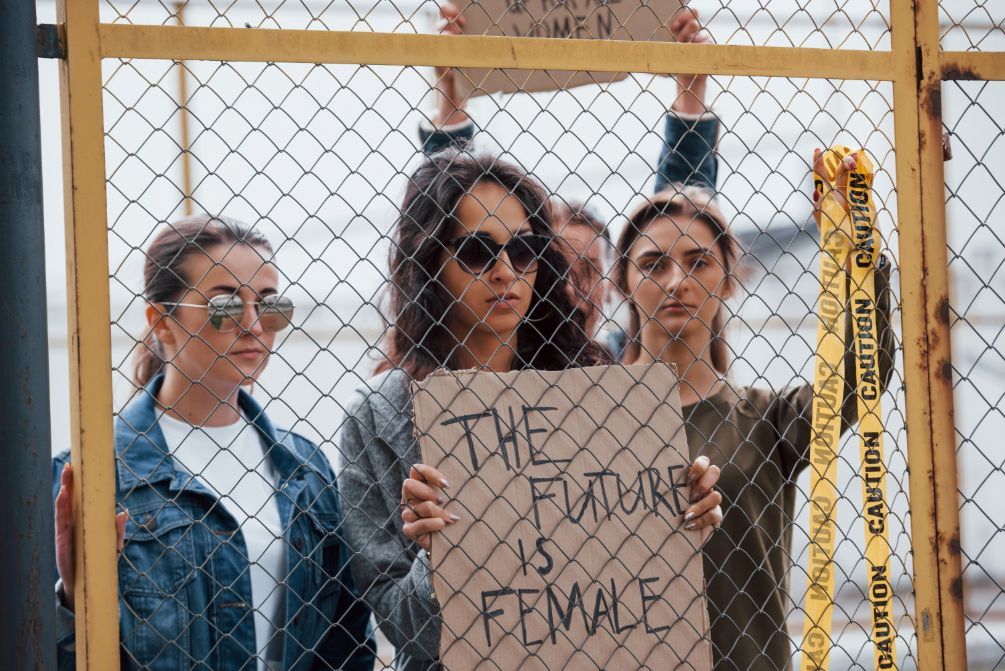
Photo by standret
What Protests Teach Us About America
Protests reveal what America really is: not the pretty picture on postcards, but the messy, angry, hopeful truth. Joiner writes that looking back at these moments “can be a useful tool in expanding the understanding about what American life was truly like.”
The silent cries for justice tell the real story.
Every protest carries a simple message: we matter.
Whether civil rights marchers in the 1960s or Dreamers today, the voice of the oppressed says the same thing. We exist, we count, and we will not disappear just because you wish us gone. The unspoken grievances are finally spoken, and they change everything.
Joiner hopes readers will understand that “America’s continuance now depends entirely upon the edification of each American individual.”
Ready to understand the full story? Dennis Joiner’s The Turn reveals how social revolutions and everyday Americans changed this country over 75 years. Get a copy today and start seeing history through new eyes.

0 Comments