


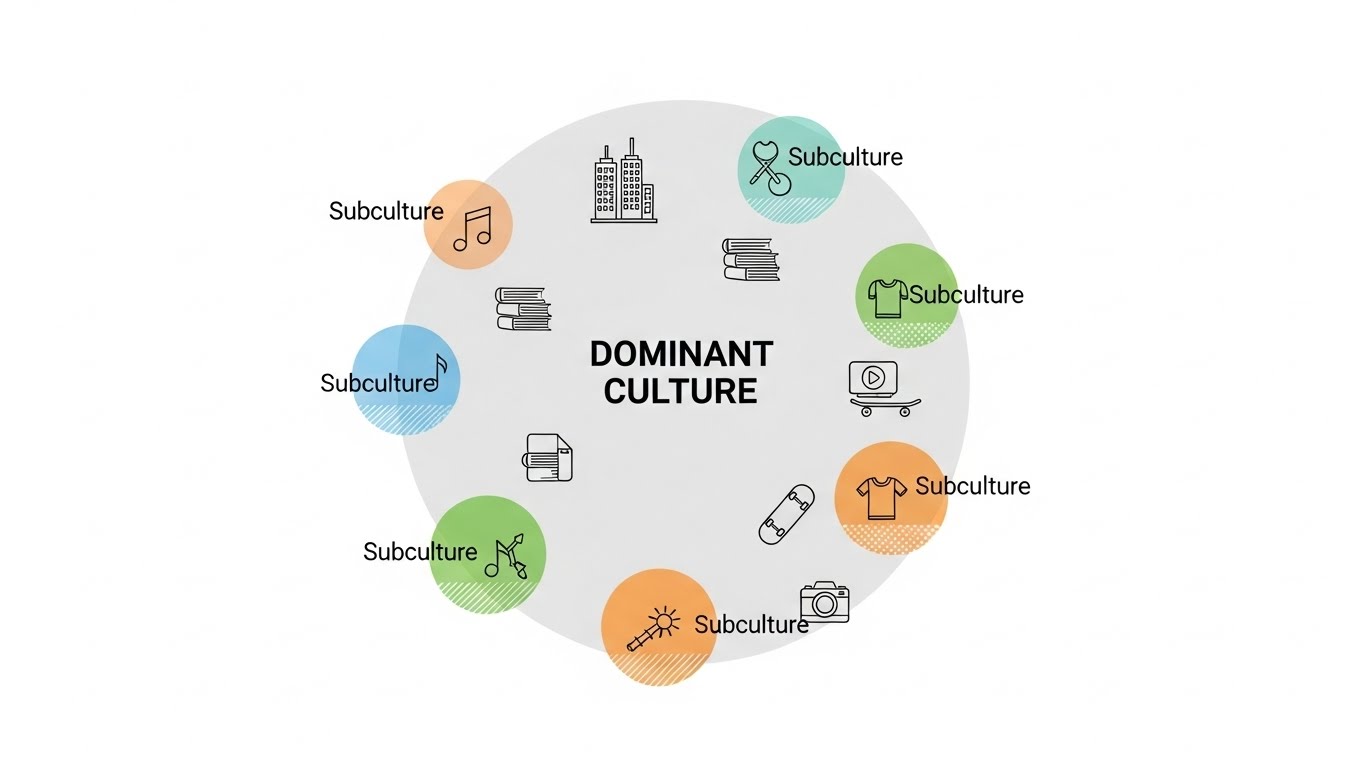
Every society has a main way of thinking, acting, and living. This is often called the dominant culture. It shapes shared rules, values, and expectations. At the same time, smaller groups exist within that larger structure. These groups develop their own values, beliefs, and habits based on shared experiences or identities. These groups are known as subcultures.
To explain the relationship between a subculture and a dominant culture is to understand how societies change, grow, and sometimes clash. This relationship helps explain why some people feel included while others feel excluded, why certain voices are amplified while others are ignored, and how power and identity interact in everyday life. It also reveals how social norms are formed, challenged, and reshaped over time.
This article aims to explain the relationship between a subculture and a dominant culture in clear and simple terms. It uses real-world examples, insights into human behavior, and awareness-based principles to show how subcultures form, respond, and interact with the dominant culture across different stages of social development. The goal is to help readers better understand cultural dynamics, social tension, and the deeper role identity plays in shaping human experience.
What Is a Dominant Culture?
A dominant culture is the set of values, beliefs, rules, and behaviors that hold the most power in a society.
It often controls:
- Laws and institutions
- Media and education
- Social norms
- Ideas of what is “normal” or “acceptable”
Most people grow up inside the dominant culture without questioning it. It shapes language, morals, and daily habits. Because it feels familiar, it often goes unnoticed.
Dominant culture is not always right or wrong. It simply holds influence and authority.
What Is a Subculture?
A subculture is a smaller group within society that shares values or practices that differ from the dominant culture.
Subcultures can form around:
- Music or fashion
- Beliefs or faith
- Race or ethnicity
- Politics or activism
- Lifestyle choices
Members of a subculture still live inside the larger society. They follow most laws and systems. Yet they express identity in ways that feel more authentic to them.
Subcultures help people feel seen and understood.
The Core Relationship Between Subculture and Dominant Culture
The relationship between a subculture and a dominant culture is interactive, not fixed.
It usually follows four main patterns:
- Resistance
- Adaptation
- Absorption
- Conflict
Each pattern reflects different levels of awareness and power.
Resistance: When Subcultures Push Back
Many subcultures form as a response to feeling ignored or restricted.
When people feel unheard, they seek new ways to express identity. This is often the first stage of awareness.
At this stage:
- People question accepted norms
- Emotional awareness increases
- Group identity strengthens
Examples include youth movements, civil rights groups, and cultural revolutions. These groups challenge ideas they believe no longer serve human dignity.
Resistance does not always mean violence. Often, it begins with language, art, or shared values.
Adaptation: Finding Space Inside the System
Some subcultures choose adaptation instead of opposition.
They:
- Keep their identity
- Adjust behavior to survive
- Learn when to blend in
This reflects a higher level of self-awareness. People understand both the system and themselves.
Adaptation allows subcultures to exist without constant conflict. It also helps individuals move between different social spaces.
Absorption: When Subculture Becomes Mainstream
Over time, parts of a subculture may become accepted by the dominant culture.
This happens when:
- Ideas feel less threatening
- Commercial interest grows
- Social attitudes shift
Music, fashion, language, and beliefs often move this way. What once felt rebellious becomes familiar.
This stage shows how dominant culture learns from subcultures, even while maintaining control.
Conflict: When Values Collide
Conflict happens when:
- Power feels threatened
- Beliefs strongly differ
- Fear replaces understanding
This stage often involves:
- Media battles
- Political pressure
- Social division
Conflict reveals deeper issues tied to fear and identity. It shows what a society values most and what it resists changing.
Power and Awareness Levels in Culture
The relationship between subculture and dominant culture reflects levels of human awareness.
At lower awareness:
- People fear difference
- Identity feels fragile
- Control feels necessary
At higher awareness:
- Difference feels safe
- Identity feels grounded
- Dialogue becomes possible
Cultural tension often rises when awareness does not grow with social change.
Emotional Awareness and Cultural Identity
Culture is not only social. It is emotional.
People join subcultures because:
- They want meaning
- They seek belonging
- They want the truth
When the dominant culture ignores emotional needs, subcultures fill the gap.
Studies show that strong group identity improves mental health when it is rooted in shared purpose. According to the American Psychological Association, belonging lowers stress and increases resilience.
Real-World Examples
Music and Youth Culture
Rock, hip-hop, and punk all began as subcultures. Each challenged norms. Over time, many aspects became mainstream.
Civil Rights Movements
Groups pushed against unequal treatment. Their ideas changed laws and social views.
Faith and Belief Systems
Religious subcultures often exist within secular societies. They shape values while remaining distinct.
Each example shows interaction, not isolation.
Why Dominant Culture Needs Subcultures
Without subcultures:
- Societies stagnate
- Creativity fades
- Truth remains unchallenged
Subcultures act as mirrors. They reflect what is missing or broken. They push growth, even when uncomfortable.
Why Subcultures Need Dominant Culture
Without a larger structure:
- Organization weakens
- Influence stays limited
- Protection disappears
Dominant culture provides systems that allow subcultures to survive long enough to grow.
Common Misunderstandings About Subcultures and Dominant Culture
Many people misunderstand how subcultures and the dominant culture relate to each other. These misunderstandings often come from fear, oversimplification, or lack of awareness. Clearing them up helps people see cultural change with more balance and less emotion.
Subcultures Are Not Always Rebellious
A common belief is that every subculture exists to fight or reject the dominant culture. This is not true.
Many subcultures form simply to:
- Preserve identity
- Share meaning
- Support one another
Some subcultures want recognition, not conflict. They do not aim to disrupt society. They aim to live honestly within it. For example, faith-based groups, artistic communities, or cultural heritage groups often focus on shared values rather than protest.
Rebellion happens when people feel ignored or dismissed. When the dominant culture allows space for expression, many subcultures remain peaceful and cooperative.
Dominant Culture Is Not Always Oppressive
Another misunderstanding is that the dominant culture always harms or suppresses others. While abuse of power can happen, dominance alone does not equal oppression.
Dominant culture also:
- Creates order
- Provides shared rules
- Maintains social stability
Many systems that support education, safety, and cooperation come from the dominant culture. Problems arise when power is used without awareness or accountability.
Oppression grows when the dominant culture refuses to listen. When dialogue exists, dominance becomes structure rather than control.
Conflict Is Not Always Bad
Conflict often carries a negative image. People associate it with division, anger, and chaos. Yet conflict can also signal growth.
Healthy conflict:
- Exposes hidden issues
- Forces reflection
- Encourages change
When subcultures challenge dominant ideas, they raise important questions. These moments can feel uncomfortable, but they help societies examine outdated beliefs.
Avoiding conflict does not bring peace. Understanding conflict does.
Most Cultural Change Happens Through Tension Followed by Reflection
Cultural change rarely happens overnight. It follows a pattern.
First comes tension:
- Different values clash
- Emotions rise
- Old rules feel strained
Then comes reflection:
- People listen
- Awareness grows
- New understanding forms
This cycle allows societies to adapt without collapse. Reflection turns tension into learning. Without reflection, tension turns into division.
Growth happens when people pause, think, and choose wisdom over reaction.
Why These Misunderstandings Matter
When people believe these myths, they:
- Fear difference
- Resist dialogue
- Miss chances for growth
When people understand the real relationship between subcultures and the dominant culture, they become more patient, open, and aware.
Cultural understanding is not about choosing sides. It is about learning how humans live together, change together, and grow together.
Facts and Statistics
- Sociologists estimate that over 70% of cultural change begins at the subcultural level
- Studies show that societies with open cultural dialogue experience lower social unrest
- Cultural inclusion improves trust and cooperation across groups
These findings support the idea that interaction matters more than dominance alone.
FAQs
What is the main difference between a subculture and a dominant culture?
Dominant culture holds power and influence. Subcultures exist within it and express different values.
Can a subculture replace a dominant culture?
Yes, over time. Many dominant cultures were once subcultures.
Are subcultures harmful to society?
No. Most promote creativity, identity, and awareness.
Why do subcultures form?
They form when people seek belonging, meaning, or expression not found in the dominant culture.
Can someone belong to both?
Yes. Many people move between cultures daily.
Conclusion and Call to Action
The relationship between a subculture and a dominant culture explains how humans grow together and apart. It reflects awareness, emotion, and shared meaning.
Understanding this relationship helps us:
- Listen better
- Judge less
- Grow more
If this article helped you see culture differently, save it, share it, or leave a comment with your thoughts.
Real change begins with awareness, and awareness grows through conversation. Read more insights about this topic with Dennis Joiner’s blogs.

0 Comments