



Literature has always been a record of conscience. Long before headlines break or social feeds erupt, novelists and essayists have traced the fault lines of a culture: its fears, its blind spots, its hypocrisies, its hopes. A society may prefer to see itself as stable, rational, and morally clear. Writers, however, tend to notice the tremors beneath the surface.
What is social commentary if not a form of witness? It is the writer standing in the middle of public life and asking difficult questions. Who holds power? Who pays the cost? What myths keep us comfortable? What truths unsettle us? The best social commentary books do not shout. They illuminate. They refuse to look away from injustice, moral confusion, or collective delusion. And because they are rooted in human experience rather than slogans, they endure.
In moments of political tension, cultural division, or moral uncertainty, readers often return to books that dare to diagnose their time. Yet the most powerful works go further. These works do not simply capture one historical moment. Instead, the narratives expose patterns. Each book reveals how fear can reshape institutions, how prejudice can hide in law, how propaganda can blur truth, and how citizens can either surrender to apathy or choose moral clarity.
The books gathered here are not chosen for trend or popularity. They are selected for resonance. Each confronts a different dimension of social reality: race, state power, media manipulation, gender, class, ideology, and moral decline. Several are novels. Others take the form of political philosophy. A number function as contemporary cultural critiques. All, in distinct ways, continue to speak into the present.
The following 10 books explore social upheaval, moral tension, and cultural transformation in distinct and unforgettable ways:
The Turn by Dennis Joiner
Dennis Joiner’s The Turn stands as a sweeping and polemical reflection on American society over the past seventy-five years. Subtitled How social revolutions and other events in the last 75 years dramatically changed America and altered the American Weltanschauung, the book positions itself not merely as history, but as diagnosis. Joiner traces what he sees as a decisive cultural shift beginning in the mid-twentieth century, arguing that postwar prosperity masked deeper fractures in moral and political life.
From the civil rights era to the Reagan years, from globalization to contemporary electoral politics, Joiner interprets each moment as part of a broader “turn” in American consciousness. His tone is urgent, even prophetic. He scrutinizes media institutions, political elites, legal structures, and shifting moral norms with an insistence that cultural decay often hides beneath progress narratives. Whether one agrees with his conclusions or challenges them, the book demands engagement. It belongs on this list because it embodies social commentary at its most unrestrained: a citizen wrestling openly with the trajectory of his nation.
1984 by George Orwell

Few novels have become as shorthand for political anxiety as Orwell’s 1984. Yet its endurance is not simply due to phrases like “Big Brother” or “thoughtcrime.” It persists because it captures how language itself can become a tool of domination.
Orwell understood that totalitarianism does not rely only on force. It thrives on the manipulation of truth, memory, and vocabulary. When words are narrowed, citizens lose the ability to articulate dissent. In an era shaped by misinformation, algorithmic influence, and competing narratives of reality, Orwell’s warnings feel less historical and more immediate. The novel asks a chilling question: What happens when truth is no longer stable?
The Fire Next Time by James Baldwin
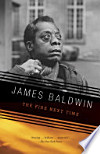
James Baldwin’s The Fire Next Time remains one of the most piercing examinations of race in America. Written in the early 1960s, it combines personal testimony with moral argument. Baldwin addresses the nation not as an outsider, but as a witness formed by its contradictions.
He rejects both sentimentality and rage without reflection. Instead, he insists on honesty. Baldwin exposes the spiritual cost of racism not only for the oppressed but for the oppressor. His voice is intimate yet prophetic, restrained yet fierce. Decades later, the essays continue to resonate because they confront the moral imagination of a country still struggling with its racial history.
The Handmaid’s Tale by Margaret Atwood
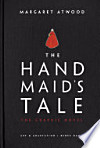
Margaret Atwood’s dystopian vision is not speculative fantasy. It is constructed from historical precedents. The Handmaid’s Tale imagines a society where women’s bodies are reduced to instruments of state control, and religious rhetoric justifies political repression.
What makes the novel endure is its restraint. Atwood does not invent horrors from nowhere. She recombines real historical patterns of authoritarianism and patriarchy. In moments when reproductive rights, gender roles, and institutional power become political battlegrounds, the book’s relevance sharpens. It reminds readers that social regression can occur gradually, through laws passed quietly, and freedoms redefined subtly.
Brave New World by Aldous Huxley
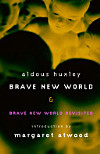
Where Orwell imagined oppression through fear, Huxley envisioned control through pleasure. In Brave New World, citizens are pacified not by terror, but by distraction and gratification.
Huxley foresaw a culture where consumption replaces reflection and entertainment replaces thought. In a world saturated with media, curated identities, and constant stimulation, his vision feels uncomfortably familiar. The novel asks whether a society can surrender its depth willingly, trading discomfort for comfort. It is social commentary that unsettles precisely because it feels plausible.
The New Jim Crow by Michelle Alexander
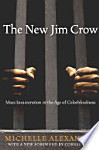
Michelle Alexander’s The New Jim Crow reframes the conversation about mass incarceration in America. She argues that the criminal justice system has functioned as a racial caste system, echoing patterns of segregation under a new name.
Rather than rely on rhetoric alone, Alexander builds her case through legal history and policy analysis. The book challenges readers to reconsider assumptions about crime, punishment, and equality before the law. It stands as a powerful example of contemporary social commentary grounded in research yet driven by moral urgency.
Fahrenheit 451 by Ray Bradbury
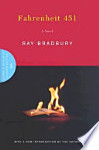
Bradbury’s dystopia centers on a society that burns books to preserve comfort. Yet the novel is less about censorship imposed from above and more about intellectual apathy from within.
In Fahrenheit 451, citizens gradually lose interest in complexity. Entertainment becomes noise. Critical thinking fades. Bradbury suggests that the erosion of culture can occur not through violent decree, but through voluntary neglect. In an age of shortened attention spans and fragmented discourse, the novel feels prophetic. It challenges readers to protect not only books, but the habit of thought itself.
The Grapes of Wrath by John Steinbeck
Steinbeck’s portrait of the Joad family during the Great Depression remains a landmark in American social fiction. The Grapes of Wrath exposes the human cost of economic displacement and unchecked corporate power.
The novel’s strength lies in its empathy. Steinbeck refuses to reduce suffering to abstraction. He shows how systemic forces, from drought to industrial farming, shape ordinary lives. In a world still marked by economic inequality and migration crises, the book continues to resonate as a reminder that economic policy is never merely theoretical. It is personal.
Silent Spring by Rachel Carson
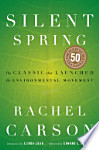
Rachel Carson’s Silent Spring transformed public understanding of environmental harm. By documenting the ecological damage caused by pesticides, she challenged corporate narratives and governmental complacency.
Carson wrote not with fury, but with clarity. Her work sparked environmental awareness and policy reform. Today, as climate change dominates global discourse, her example remains instructive. Social commentary can be measured and scientific, yet still transformative.
The Origins of Totalitarianism by Hannah Arendt
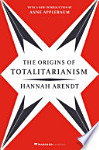
Hannah Arendt’s landmark study examines the political conditions that give rise to totalitarian regimes. She analyzes antisemitism, imperialism, and ideological extremism with rigorous insight.
Arendt’s enduring contribution is her exploration of how ordinary citizens become entangled in systems of oppression. She warns against complacency and highlights the fragility of democratic institutions. Her work remains essential for readers seeking to understand how societies drift toward authoritarianism not overnight, but through cumulative shifts.
Closing Reflection
Social commentary books endure because they refuse to flatter their readers. These works do not promise comfort. Instead, they offer clarity. Each one reminds readers that institutions are human creations and can therefore be reshaped. They also challenge citizens to examine their complicity as well as their convictions.
In an age of rapid information and quick outrage, serious literature slows the conversation. It demands sustained attention. It invites readers to confront complexity rather than reduce it. Whether through dystopian fiction, historical analysis, or moral essay, these books insist that society is not fixed. It is argued into being.
If literature still matters, it is because it preserves the space for that argument.
Frequently Asked Questions
A strong social commentary book goes beyond storytelling to examine power, inequality, culture, or moral tension within a society. It does not simply entertain. It challenges assumptions, exposes hidden structures, and invites readers to reflect on how institutions and beliefs shape everyday life.
These books endure because they address patterns rather than trends. While the political landscape changes, themes like state control, racial injustice, economic disparity, censorship, and moral conflict continue to resurface. The best works capture human behavior in ways that transcend their original historical moment.
Yes. Dystopian fiction often serves as powerful social commentary by exaggerating real social conditions to reveal their dangers. Authors use imagined futures to critique present realities, highlighting how unchecked power, technological overreach, or moral complacency can reshape society.
Readers can engage more deeply by paying attention to historical context, author perspective, and recurring themes. Asking questions about who benefits, who suffers, and what assumptions are being challenged can turn reading into an active exploration rather than a passive experience.
The strongest works tend to provoke thought rather than dictate conclusions. While some authors clearly argue a position, enduring social commentary invites reflection. It opens space for dialogue, moral examination, and personal interpretation rather than offering simple answers.

0 Comments