


Photo by freepik
Before the 20th century, the family dynamic among Americans was quite different. Then came an invention that changed everything. Let’s talk about how television changed family life in 1950s America and forward.
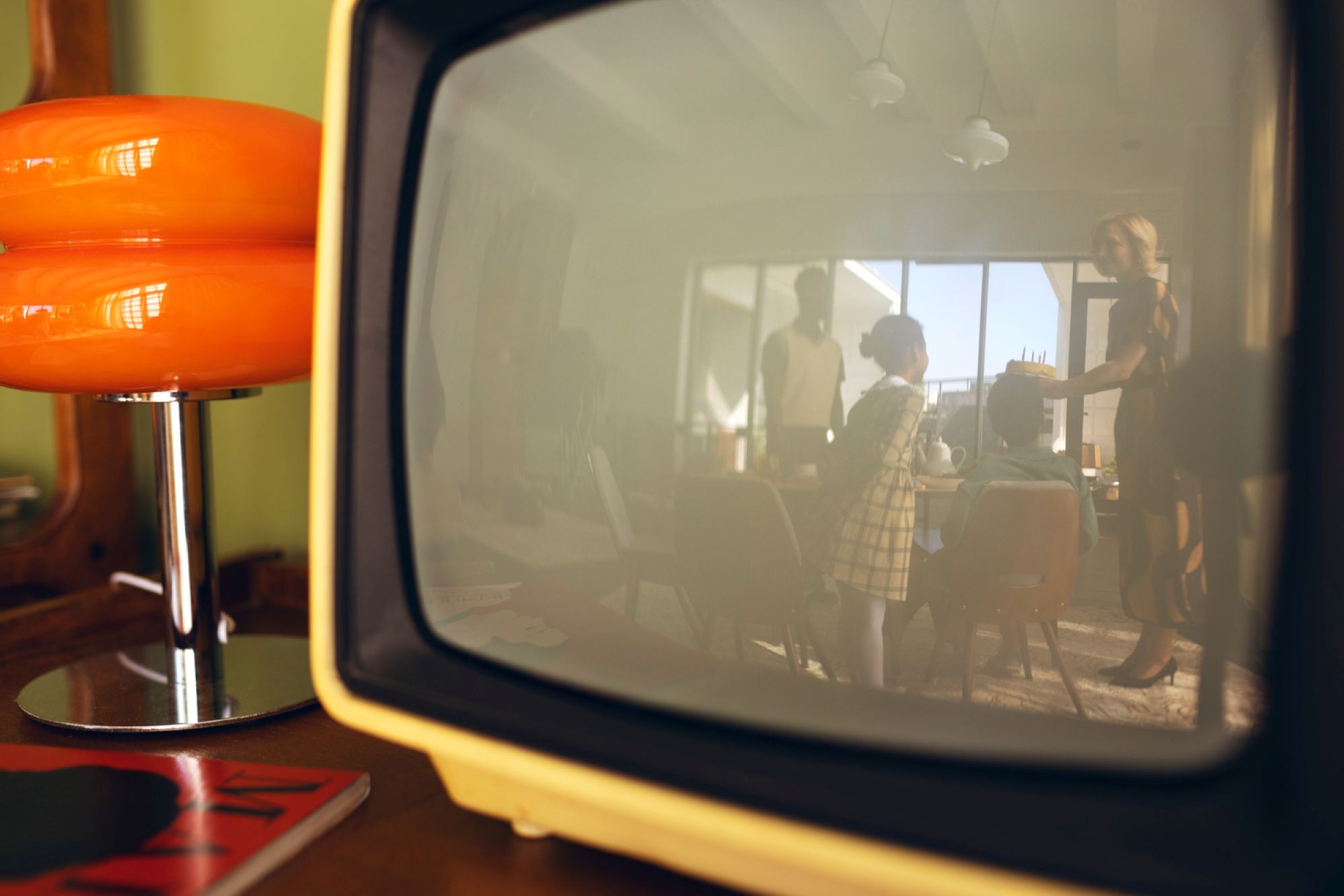
Before the 1950s, most American families told stories, played games, or listened to the radio together. But that old way of life shifted when the first commercial television sets entered living rooms across the country, which people quickly came to call the small screen; it quickly became the center of home life.
Cathode ray tube sets sat in wooden cabinets, which families saved for months to buy: the black and white TV monitors flickering with only three or four channels.
Yet that tiny window felt enormous to most families.
For the very first time ever, people could watch news, comedies, and dramas without leaving their sofas. The small screen did more than entertain, teaching people how to act, what to buy, and whom to trust.
The pioneer era of television turned the family room into a pseudo-classroom, where children learned from Westerns and sitcoms.
The shape of American family life was changed forever.

Photo by freepik
How Television Changed Family Life in 1950s America
Dennis Joiner writes in The Turn: “By the 1950s, TV had become a vehicle of anti-black propaganda and stereotyping,” but its influence went far beyond that egregious harm. The small screen was pulling families away from familial conversation, pointing, unwittingly or not, their eyes toward one glowing box that seemed to capture their whole attention. Joiner notes also that “television helped codify a delusive black culture,” yet even white suburban families absorbed a fake version of their own lives from the small screen, with shows like Leave It to Beaver presenting a perfect world that did not exist as families began comparing themselves to these fictitious images.
Before the small screen, families ate together and talked about their days.
Through this daily ritual of sustained interaction and engagement, family bonds were strengthened and deepened, giving each member of the family a window into the others’ lives.
After the television arrived, many households started moving meals from the dinner table to the front of the set, dropping conversations and stopping stories. It seemed as if news anchors and sitcom stars had replaced parents and siblings and cousins as the main voices in the room.
Joiner explains that “the media also promoted demeaning stereotypes of black Americans that helped confirm white American’s notions of superiority.”
But beyond that ugliness, the small screen was reshaping habits.
- Children’s bedtimes shifted because of prime-time shows as children rushed through homework to catch their favorite programs.
- Parents used the television as a babysitter, planting young kids in front of cartoons for hours.
- Family outings were becoming less common, with weekend afternoons once spent playing catch or visiting grandparents now going to wrestling matches and western serials.
The small screen was stealing time from real relationships.
The Pioneer Era Brought Families Together and Pulled Them Apart
During the pioneer era of television, families shared the same physical space but were living in very different mental worlds. Vintage cathode ray tube sets glowed in corners while everyone watched the same few channels. That newfound shared experience had the potential to bring laughter or tears together.
Joiner recalls that “in the ‘50s, the stereotypical American family spent quality time together, often gathered around the television.” A popular variety show or a World Series game could unite a house and, for a brief moment, the small screen worked like a campfire.
Yet that togetherness came with a price.
Children and parents watched the same shows but understood them differently: kids laughed at cartoon violence while adults worried about real-world dangers.
Joiner notes that “graphic news footage from Vietnam brought horrifying, moving images of an offensive reality into Americans living rooms for the first time.” The small screen did not filter tragedy, and families saw blood, fire, and anger during dinnertime.
Black and white TV monitors could not hide the truth.
When the Civil Rights Movement marched across the small screen, white families watched black protesters being beaten with hoses and dogs, shocking some viewers and hardening others.
Joiner argues that “TV was also the new conduit for stereotypes and lies,” but it also carried painful facts that brought political arguments to the dinner table for families to argue with each other. Parents tried to explain injustice while children asked hard questions.
Joiner observed that “the media’s ability to frame certain narratives [through the television had] a substantial impact on we-the-people.”
The small screen was no longer just a window for entertainment—it forced families to face a changing nation, whether they wanted to or not.
The Small Screen Rewired Rules and Routines
The TV changed not just what families watched but how they lived. They crept into households slowly and quietly until they became a common fixture, as normal as a chair or a drawer.
Bedrooms, once used only for sleeping, now held small televisions while children begged for sets of their own. Now, televisions were not confined to single spaces in the house. They could be anywhere. Now, parents were losing control over what their kids saw late at night, for the small screen had transformed into a secret window peering into adult content—violence, sex, and rebellion.
Daily schedules bent around broadcast times with families planning dinners around the evening news, and stores closing early on nights of popular shows. The first commercial television sets demanded attention, and families obeyed its requests.
Joiner writes that “television news began to transition from providing useful and reputable information to pure entertainment.” That shift meant families spent hours watching fluff instead of learning together.

Photo by freepik
Learning from the Past and Understanding the Turn
Families today face even more screens—phones, tablets, and laptops. But the root of the change started with that humble small screen in the 1950s. Understanding that history helps people see how technology shapes love, talk, and trust at home. Dennis Joiner’s book The Turn digs deep into 75 years of American life, including the rise of television and its lasting effects. His sharp critique of media, politics, and culture offers readers a chance to wake up from the lies the small screen planted long ago.
Do not let another generation sit silent in front of a glowing box: buy The Turn and learn how American families lost their way—and how they might find it again.

0 Comments