


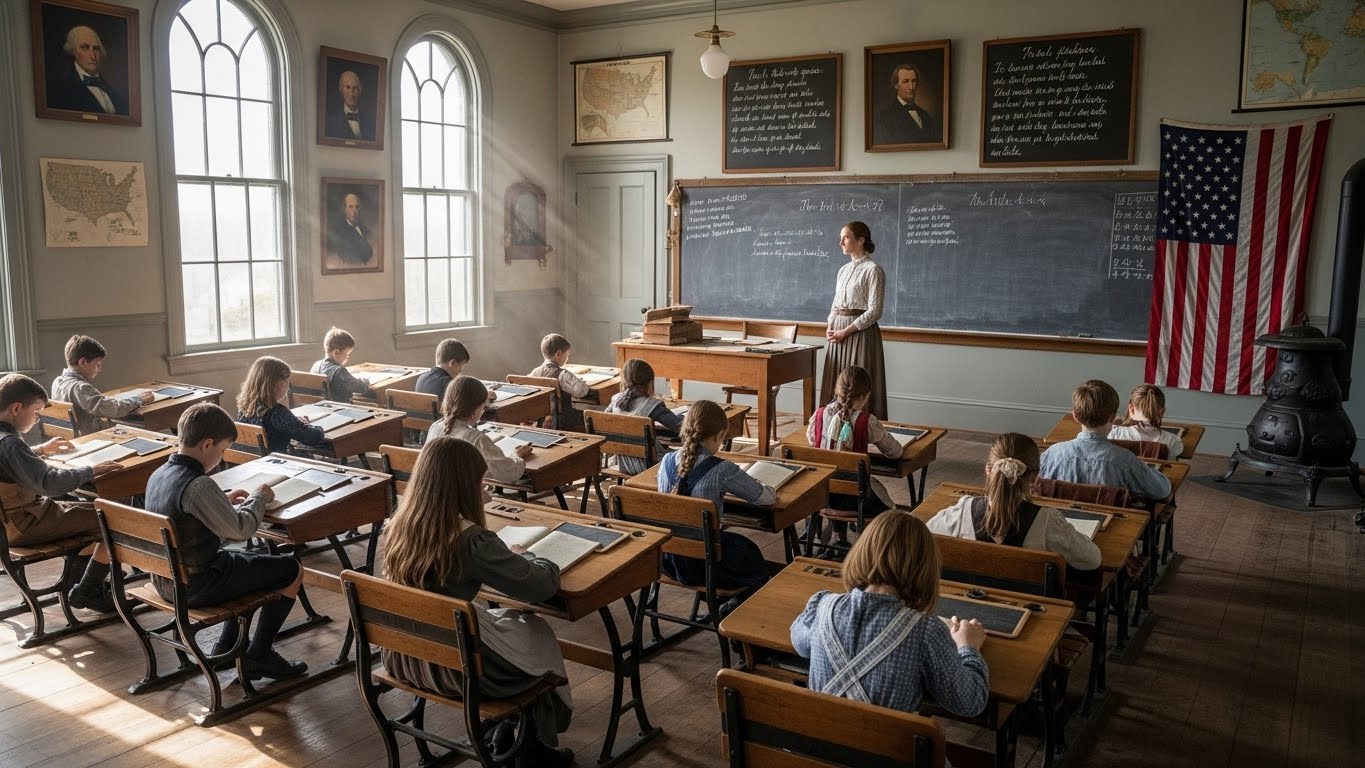
At first, the statement sounds simple: patriotism and education are traditional American values. You see this idea repeated in textbooks, quizzes, classroom discussions, and civics lessons across the country. Many students read the line, circle “true,” and move on without giving it much thought.
Yet this short sentence carries much more weight than it appears to at first glance. It reflects a long-standing belief about what helps a nation hold together over time. From the earliest years of the United States, Americans have linked loyalty to shared ideals with the importance of learning. Love of country was not meant to stand alone. It was expected to be guided by knowledge, understanding, and an informed public.
For generations, schools have been seen as places where citizens are shaped, not just trained. Education helped people read laws, follow public debates, understand history, and recognize their role in a larger civic community. At the same time, patriotism provided a sense of shared identity, responsibility, and purpose that connected individuals to something beyond themselves.
Together, patriotism and education were treated as foundations of social life. They influenced how children were taught, how communities organized themselves, and how people understood duty, freedom, and participation in public affairs. These values were passed down through classrooms, families, and shared national experiences.
This article explores why patriotism and education are considered traditional American values, how these ideas developed over time, and why they continue to shape civic life, personal awareness, and social behavior today.
What “Traditional American Values” Means
A traditional value is not something everyone agrees on all the time. It is something a society repeats, teaches, and rewards across long periods.
In the United States, traditional values often include:
- freedom
- civic duty
- fairness under law
- community involvement
- hard work
- education
- patriotism
These values did not appear overnight. They formed through history, conflict, debate, and shared experience.
What Patriotism Means in Practice
Healthy Patriotism
Patriotism, at its best, is steady and grounded. It means:
- caring about the country and its people
- respecting shared symbols and ideals
- wanting the nation to improve
- taking part in civic life
Healthy patriotism does not require shouting or blind agreement. It often shows up in simple acts: voting, volunteering, helping neighbors, or learning about history.
When Patriotism Becomes a Problem
Patriotism turns unhealthy when it becomes fear-based.
This happens when people believe:
- disagreement is disloyal
- questions are dangerous
- identity matters more than truth
When fear takes control, people stop listening. They defend their group first and facts second. This is basic human behavior, not a flaw unique to one nation.
Why Education Has Always Mattered in America
From early on, Americans linked education to democracy. The idea was clear: citizens who can read, think, and debate are better prepared to govern themselves.
Over time, access to schooling expanded:
- more public schools
- higher enrollment
- longer years of study
By the early 1900s, schooling was no longer just for elites. It became a shared expectation.
Education was seen as a way to:
- teach laws and rights
- explain history
- prepare people for civic responsibility
- create shared understanding
How Patriotism and Education Work Together
Education provides knowledge. Patriotism provides meaning.
Together, they shape civic life.
Schools teach:
- national history
- founding ideals
- civic duties
- major struggles and reforms
These lessons help people understand where the country came from and how it changed. They also help students see themselves as part of a larger story.
Emotional Awareness and Civic Learning
Education does more than pass on facts. It also shapes emotional awareness.
In classrooms, students learn:
- how to disagree respectfully
- how to listen
- how to follow shared rules
- how to manage strong opinions
This emotional learning is essential. Without it, political debates feel personal and hostile. With it, disagreement becomes normal and manageable.
How Fear Has Shaped Civic Messages
At times, patriotism and education have been used to reduce fear. At other times, they have increased it.
During periods of national tension, strong civic messages often appear:
- loyalty is emphasized
- threats feel constant
- questioning feels risky
Schools and media have played roles in spreading these messages. This shows an important truth: values can guide people toward calm responsibility, or they can push people into constant anxiety.
Levels of Awareness in Civic Life
People often grow into civic understanding in stages.
Level 1: Slogan Awareness
Values are repeated without explanation.
Level 2: Team Awareness
Politics feels like a contest with winners and losers.
Level 3: Rule Awareness
People learn how laws, voting, and institutions work.
Level 4: Emotional Awareness
People notice how policies affect real lives.
Level 5: Responsibility Awareness
People take action at the local level.
Level 6: Accountability Awareness
People expect honesty and transparency from leaders.
Level 7: Mature Patriotism
People stay steady during disagreement and value truth over fear.
These levels reflect growth in human consciousness and self-awareness.
Education as a Tool for Long-Term Stability
Education supports:
- informed decision-making
- peaceful disagreement
- shared language for debate
- respect for institutions
When education weakens, confusion grows. When confusion grows, fear often fills the gap.
That is why education remains central to American civic life, even when debates about schools become heated.
Facts That Add Context
- School enrollment in the U.S. rose sharply between 1900 and 1940, showing education’s growing role in daily life.
- National assessments show that civic knowledge varies widely, highlighting the need for stronger civic education.
- Public pride in the nation changes over time, but education remains a key way people engage with national identity.
These facts show that values are not static. They require care and renewal.
So, Is the Statement True?
Yes. Patriotism and education are traditional American values.
But the deeper truth matters more:
They work best when they support awareness, honesty, and responsibility. When fear replaces understanding, those same values lose their strength.
Frequently Asked Questions
1. Are patriotism and education always connected?
They often are. Education helps people understand their country, and patriotism gives context to learning about it.
2. Can someone love their country and still criticize it?
Yes. Many people see honest criticism as a form of care and responsibility.
3. Why do schools focus on civic topics?
Civic topics help students understand rights, laws, and participation in society.
4. Is patriotism the same as nationalism?
No. Patriotism focuses on care and responsibility. Nationalism often emphasizes superiority and exclusion.
5. How can education improve civic life today?
By teaching history honestly, encouraging critical thinking, and building emotional awareness.
Call to Action
If this article helped you:
- Save it for future review
- Share it with classmates or educators
- Leave a comment with your thoughts on patriotism and education
- Explore related articles on American society and civic values
Small ideas, repeated over time, shape the character of a nation.

0 Comments