


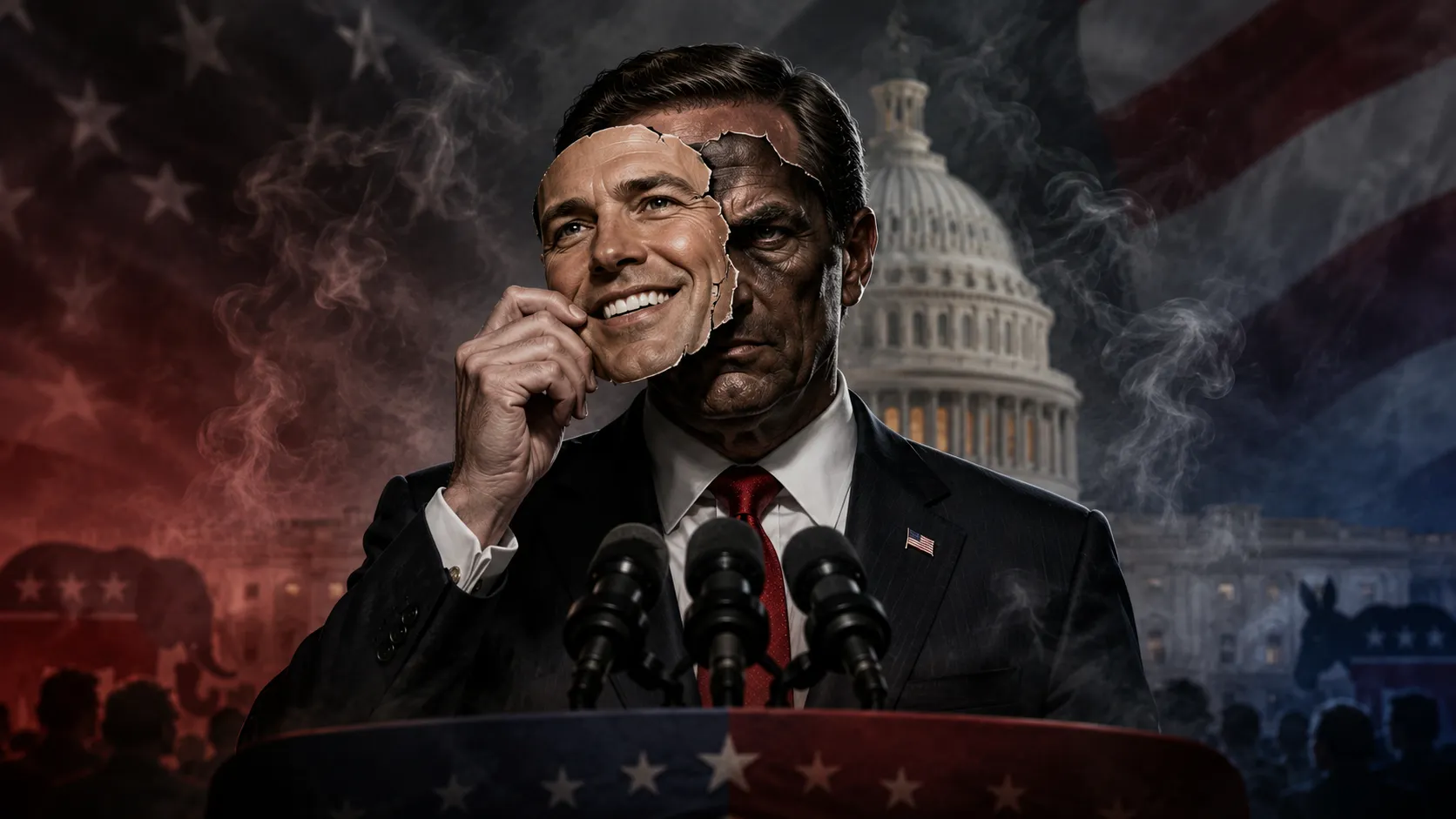
There is a certain smell to American politics now. Not literal, of course, but you know it when it appears: the polished speech, the moral outrage delivered on cue, the campaign promise that sounds noble until it meets money, party loyalty, or power.
Something kept nagging at me every time I read political commentary on hypocrisy. Most pieces either condemn it as proof that the country is rotten or defend it as an unavoidable part of democracy. Both views have a point. But neither fully explains why hypocrisy feels so exhausting to ordinary people who are simply trying to figure out what is true, who is acting in good faith, and whether public life can still be trusted.
That is what this article is really about. Not just hypocrisy as a political insult. Not just “both sides do it.” This is about why the odor of hypocrisy in modern American politics has become so strong, why it spreads so easily, and how citizens can learn to detect it without becoming cynical about everything.
What Political Hypocrisy Actually Means
Political hypocrisy happens when public leaders, parties, media figures, or institutions claim to stand for one principle, then abandon that same principle when it threatens their side.
It is not the same as changing your mind. People can grow. Facts can change. A leader can revise a position honestly and explain why.
Hypocrisy is different. It usually has three parts:
First, there is a stated moral standard. A politician says they believe in free speech, law and order, democracy, transparency, fiscal responsibility, constitutional limits, family values, equality, or national unity.
Second, there is a convenient exception. The standard suddenly becomes flexible when their party, donor, ally, or career is at risk.
Third, there is a performance of innocence. They act as if no contradiction exists.
That third part is where the smell comes from.
A politician who openly says, “I only care about winning,” may be selfish, but at least the public knows what they are dealing with. The hypocrite does something more corrosive. They use the language of virtue to protect behavior that contradicts it.
This is why so many Americans feel talked down to. They are not just seeing disagreement. They are seeing leaders pretend that yesterday’s principles never existed.
Why the Smell Feels Stronger Now
Political hypocrisy is not new. The United States has always wrestled with the gap between its ideals and its actions. A country founded on liberty tolerated slavery. A country that speaks of democracy has supported anti-democratic actions abroad. A government that praises equality has often moved slowly when equality required real sacrifice.
What feels different now is speed, visibility, and tribal forgiveness.
Every contradiction is archived. Every old speech can be clipped. Every public statement can be compared against a vote, a donor record, a court filing, or a private leak. The internet did not create hypocrisy, but it made hypocrisy searchable.
At the same time, many voters have become more willing to excuse contradictions from their own side while treating the other side’s contradictions as proof of moral collapse. Democracy Fund’s VOTER Survey report calls this “democratic hypocrisy,” finding that many Americans support democratic norms in the abstract but become less consistent when those norms clash with partisan interests. In one example, about 24 percent of Americans changed their views on congressional oversight from 2019 to 2022, and 83 percent of those changes favored partisan interests.
That matters. It means the problem is not just dishonest politicians. It is also selective outrage among the public.
We often want rules, but we want them enforced harder on the other team.
How This Happens Without Anyone Technically Lying
The most effective hypocrisy in politics is rarely a bald-faced lie. It usually hides in framing.
A leader does not say, “I support executive overreach when my party controls the White House.” They say, “This is an emergency.”
A senator does not say, “My position on court appointments depends on who benefits.” They say, “The situation is different now.”
A media figure does not say, “I care about corruption only when it damages the other side.” They say, “This story raises serious questions,” then quietly lose interest when the same questions point inward.
That is why political language matters so much. A reference text on America’s social and political decline describes public life as polluted by “glittering words and fuzzy phrases” used to conceal real objectives, which is a harsh framing, but it captures something many readers already sense: political words often soften, hide, or perfume what power is actually doing.
The phrase “odor of hypocrisy” works since hypocrisy is often detected before it is proven. You hear a speech, and something feels off. The words are clean. The posture is moral. But the pattern says otherwise.
For readers interested in this same pattern through a media lens, the article on political gaslighting and the manufacture of false reality connects closely with this issue. Hypocrisy becomes more powerful when the public can be trained to doubt its own memory.
The Partisan Double Standard Is the Engine
Modern American politics runs on moral comparison. Each party sells itself as the last barrier against the other side’s corruption, extremism, cruelty, or incompetence.
That creates a dangerous incentive. If the other side is framed as an existential threat, then almost anything your side does can be excused as defensive.
This is how hypocrisy becomes normal.
A party that condemns attacks on institutions may attack those same institutions when rulings go against them. A party that praises local control may reject it when local communities choose policies it dislikes. A party that talks about free markets may support government intervention for favored industries. A party that talks about protecting democracy may bend rules to preserve its own advantage.
The details differ by issue and party, but the habit is familiar.
This is also why “both sides are hypocritical” is both true and incomplete. Yes, hypocrisy appears across the political spectrum. But stopping there can become lazy. The better question is: what principle is being abandoned, who benefits, and what excuse is being used?
That question forces us to look at behavior instead of team colors.
Money Makes the Smell Harder to Ignore
Political hypocrisy becomes sharper when money enters the room.
A candidate can speak movingly about working families while depending on wealthy donors. A party can condemn corruption while building fundraising machines that reward access. A lawmaker can rail against “special interests” while quietly accepting help from groups that expect something in return.
The Supreme Court’s 2010 decision in Citizens United v. FEC struck down restrictions on independent political expenditures by corporations and unions, with the Federal Election Commission noting that the ruling overruled earlier limits on corporate independent expenditures and electioneering communications.
The legal argument involved free speech. The political result, in the eyes of many critics, was a system where wealthy groups gained more power to shape elections while ordinary voters were still told that the system belonged equally to them. The Brennan Center argues that the decision tilted political influence further toward wealthy donors and corporations.
This is where hypocrisy becomes more than an attitude. It becomes structural.
If politicians need large amounts of money to compete, then public virtue and private dependence will keep colliding. The speeches will remain democratic. The incentives may be much less so.
That tension also connects with larger debates over market justice vs. social justice, especially when political leaders praise fairness while defending systems that many citizens experience as rigged.
Why Hypocrisy Does Not Always Mean the Ideal Is Dead
Here is the part I had to sit with for a while: hypocrisy may be ugly, but it can also prove that ideals still have power.
Shadi Hamid makes this argument in TIME, suggesting that hypocrisy can be an uncomfortable sign that a society still recognizes virtue. His point is not that hypocrisy is good in itself. It is that a hypocrite still feels pressure to pretend loyalty to a moral standard, and that standard can be used to hold them accountable.
I think that is partly right.
If a politician says they believe in equal justice, then fails to practice it, citizens can confront them with their own words. If a country claims to defend democracy, critics can measure its conduct against that claim. If a leader promises transparency, voters can ask why the records are hidden.
Hypocrisy leaves a handle.
Pure cynicism does not. A shameless leader who no longer pretends to care about truth, restraint, fairness, or law gives the public less moral language to work with. That does not make hypocrisy noble. It simply means the presence of hypocrisy can reveal that the public still expects better.
The danger begins when citizens stop using ideals as standards and start using them as costumes.
What Most People Get Wrong About Political Hypocrisy
The biggest mistake is treating hypocrisy as something only “bad people” do.
In reality, hypocrisy often begins with loyalty. You like a candidate. You fear the other party. You believe the stakes are high. So you give your side extra grace. You call their misconduct “strategy,” “bad optics,” “imperfect messaging,” or “necessary compromise.”
But when the other side does something similar, you call it authoritarian, corrupt, immoral, or dangerous.
That does not mean all political actions are equal. Some are worse than others. Some lies are bigger. Some abuses of power do more damage. Moral judgment still matters.
But if your standard changes depending on who benefits, you are no longer defending a principle. You are defending a side.
I have caught myself doing this in small ways. I have read a headline about one politician and immediately wanted the harshest interpretation. Then I have read a similar story about someone closer to my own assumptions and instinctively looked for context. That little pause is revealing. It shows how easily hypocrisy enters through the side door, not as a conscious decision, but as a reflex.
The hard work is not spotting hypocrisy in people you already dislike. Anyone can do that.
The hard work is spotting it when it helps your side.
The Real-World Cost: Trust Decays Slowly, Then Suddenly
Hypocrisy damages politics in stages.
At first, people roll their eyes. They assume politicians are just being politicians.
Then they begin to distrust specific leaders.
Then they distrust parties.
Then they distrust institutions.
Finally, they distrust the idea that truth can be known in public at all.
Pew Research Center reported in 2024 that only about 22 percent of Americans said they trusted the federal government in Washington to do what is right just about always or most of the time. Gallup also found that Americans’ average confidence in major U.S. institutions remained near record lows, with 28 percent expressing “a great deal” or “quite a lot” of confidence in nine tracked institutions in 2025.
Those numbers are not just political trivia. They show a country where many people no longer believe public institutions are acting honestly.
Once trust falls that low, even truthful statements become harder to hear. Every fact sounds like spin. Every investigation sounds selective. Every court ruling sounds political. Every apology sounds scripted.
That is the long-term cost of hypocrisy. It does not simply make leaders look bad. It makes public reality feel unstable.
For a broader cultural angle, understanding today’s American worldview is useful reading, especially if you want to think about why citizens can look at the same event and see entirely different moral stories.
How to Smell Hypocrisy Before It Overwhelms the Room
You do not need to become a full-time political analyst to detect hypocrisy. You just need better questions.
Ask: Did this person apply the same standard when power changed hands?
Ask: Is the principle clear enough to survive inconvenience?
Ask: Who benefits if the public accepts this explanation?
Ask: What did this person say when their own side did the same thing?
Ask: Are they asking for accountability, or only punishment for enemies?
These questions keep you from becoming a passive consumer of outrage.
They also protect you from cheap “gotcha” politics. Not every inconsistency is hypocrisy. Sometimes a lawmaker learns more. Sometimes a crisis creates real tradeoffs. Sometimes two cases look similar online but differ in legally important ways.
A serious citizen leaves room for that.
But serious citizenship also refuses to be fooled by costume changes. If a public figure changes principles every time power changes hands, you are not looking at moral growth. You are looking at appetite.
FAQs About Hypocrisy in Modern American Politics
Is political hypocrisy worse today than in the past?
It is hard to prove that politicians are more hypocritical today than before, but hypocrisy is easier to see, record, and share. Social media, video archives, donor databases, and 24-hour commentary make contradictions more visible. What may be worse now is the public’s willingness to excuse hypocrisy when it helps their own side.
Is hypocrisy always bad in politics?
Hypocrisy is harmful when it hides corruption, weakens accountability, or teaches citizens that principles are just tools. But the existence of hypocrisy can also mean public ideals still matter. If leaders feel pressure to pretend they support justice, democracy, or fairness, citizens can use those stated ideals to hold them accountable.
What is the difference between hypocrisy and changing your mind?
Changing your mind involves explanation, evidence, and some honest admission that your earlier view shifted. Hypocrisy usually involves pretending the standard never changed. A politician who says, “I was wrong, and here is why,” is very different from one who acts as if the old position never existed.
Why do voters tolerate hypocrisy?
Many voters tolerate hypocrisy out of fear, loyalty, or distrust of the other side. If they believe the opposing party is dangerous, they may excuse their own side’s contradictions as necessary. This is one reason partisan double standards are so powerful in American politics.
How can ordinary citizens respond to political hypocrisy?
The best response is to apply standards consistently, especially to politicians you like. Save old statements, compare actions with promises, read beyond friendly media sources, and avoid defending behavior you would condemn if the other party did it. The goal is not perfect neutrality. The goal is honest judgment.
The Uncomfortable Hope Hidden Inside the Stench
The odor of hypocrisy in modern American politics is real. It comes from the gap between words and actions, from selective outrage, from money dressed up as principle, from leaders who trust voters to forget what they said last year.
But I do not think the answer is to give up on politics or assume everyone is equally corrupt. That kind of cynicism feels intelligent for about five minutes, then turns into surrender.
A better answer is harder, but more useful: keep the standard alive.
When a leader says “law and order,” ask if they mean law for allies too. When they say “democracy,” ask if they accept losses. When they say “freedom,” ask whose freedom counts. When they say “the people,” ask which people are quietly excluded.
Hypocrisy smells strongest where ideals are being used but not honored.
That means the work is not to stop caring about ideals. The work is to stop letting powerful people borrow them for free.
Sources & Further Reading
If you want to go further with any of this, here are a few things worth your time:
Shadi Hamid’s TIME essay, “In Defense of American Hypocrisy,” offers a thoughtful argument that hypocrisy can reveal a society’s remaining attachment to moral ideals.
Democracy Fund’s report, “Democracy Hypocrisy: Examining America’s Fragile Democratic Convictions,” is useful for understanding partisan double standards and wavering support for democratic norms.
Pew Research Center’s report on Americans’ trust in the federal government gives helpful context for how low institutional trust has become.
Gallup’s confidence in institutions trend is worth reviewing if you want a longer view of public trust across major U.S. institutions.
The Federal Election Commission’s page on Citizens United v. FEC is a direct source for understanding the legal change that reshaped modern campaign spending.
If this helped you think more clearly about American politics, pay attention to the next time a public figure uses a beautiful principle to defend an ugly exception. That moment is usually where the odor begins.

0 Comments