


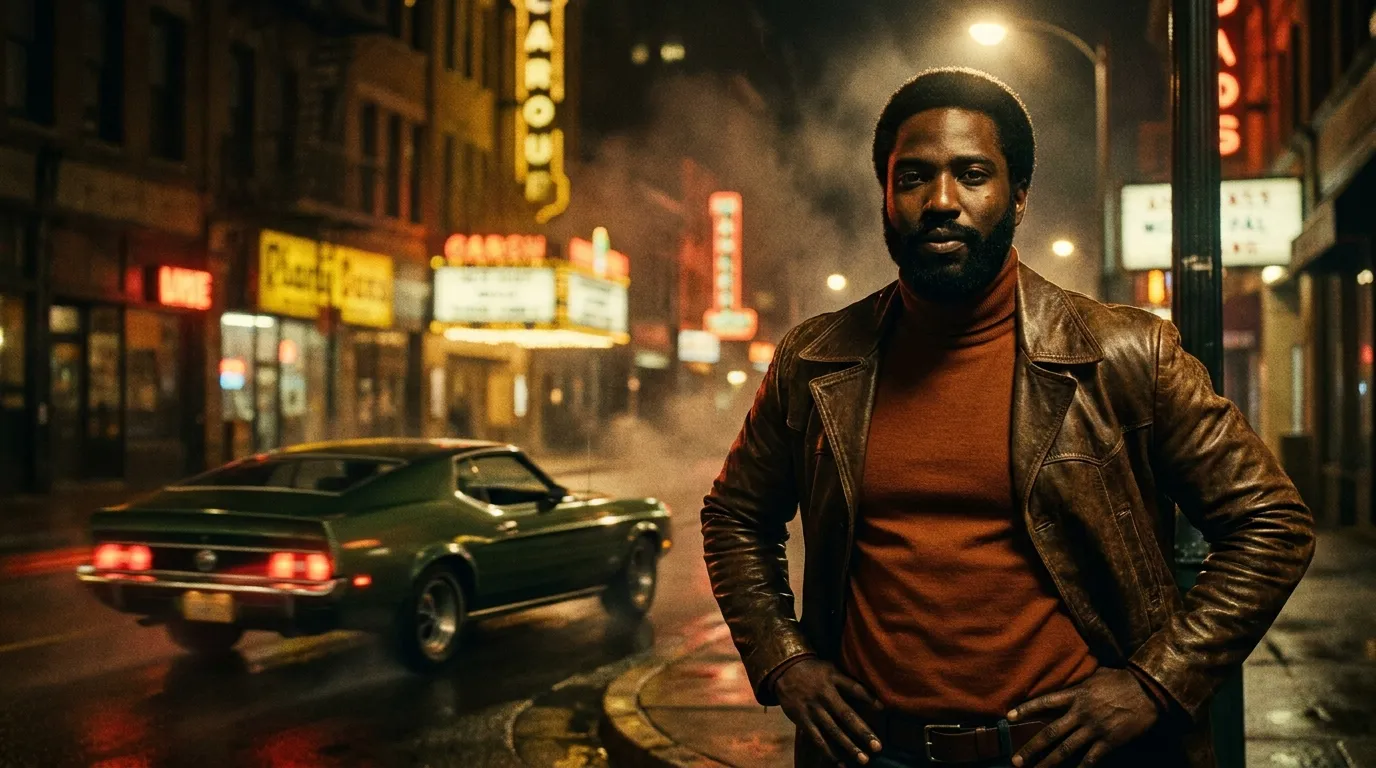
In the early 1970s, Black filmmakers began telling their own stories. This shift gave rise to the Blaxploitation genre. This movement coincided directly with the aftermath of the Civil Rights era and the rise of the Black Power movement. Audiences saw Black protagonists triumph over a racist system. However, these characters were often tied to crime, drugs, and street violence. The films reflected the growing confidence of Black communities. They also exposed Hollywood’s persistent systemic exploitation.
The Quick Takeaway: Blaxploitation cinema reflected black American identity in the 1970s by projecting a fantasy of empowerment and resistance against white authority, even while remaining financially exploited by the mainstream studio system. These films revealed a deep cultural dissonance, celebrating black pride through characters who simultaneously reinforced harmful stereotypes born from centuries of systemic racism.
Core Comparison Matrix: Evolution of Black Representation in Cinema
| Component | Pre-1970s Hollywood Representation | Early Blaxploitation Cinema (1971-1975) | Co-opted Studio Blaxploitation |
|---|---|---|---|
| Character Archetypes | Subservient maids, porters, and comic relief figures lack agency. | Hyper-masculine private eyes, street-smart hustlers, and vigilante heroes. | Exaggerated caricatures of pimps and drug dealers prioritize style over substance. |
| Relationship to Authority | Respectful, docile, and submissive to white institutional power. | Subversive, confrontational, and actively dismantling white power structures. | Superficial rebellion that ultimately reinforced the status quo through chaotic violence. |
| Economic Control | Total white ownership of production, distribution, and profit. | Initial independent financing with black directors retaining some creative control. | Major studio financing that exploited black talent while siphoning profits to white executives. |
How Blaxploitation Films Reflected Black American Identity in the 1970s
The Shift from Subservience to Hyper-Visibility
Before 1971, mainstream cinema largely ignored Black life. Black actors were often limited to servants, porters, or comic relief. These characters possessed no agency, existing solely to support white narratives. The cultural landscape began to fracture as the Civil Rights movement forced a reckoning with the lingering social wounds of the Jim Crow era. Black Americans wanted to see themselves portrayed as fully realized people, not as props in white supremacist narratives. Independent filmmakers recognized this hunger and began crafting stories that centered on the urban black experience.
Melvin Van Peebles shattered the existing paradigm with “Sweet Sweetback’s Baadasssss Song” in 1971. The film presented a black protagonist who rebelled against police brutality and survived, an entirely radical concept at the time. Gordon Parks followed with “Shaft,” offering a suave, unapologetically black detective who operated outside the confines of white law enforcement. These characters were flawed, street-wise, and empowered. They fought corrupt cops and politicians. This gave audiences a sense of release after decades of ineffective peaceful protest. The visual language of these films rejected the polished, sterile aesthetic of traditional Hollywood in favor of gritty, urban realism.
This hyper-visibility carried a high psychological cost. While black audiences finally saw themselves defeating the oppressor, the heroes were almost exclusively defined by their proximity to crime. The pimp, the pusher, and the hitman became the new archetypes of black masculinity. Society was offered a binary choice between the emasculated servant of the past and the hyper-violent antihero of the present. This shift failed to capture the vast diversity of black American identity. It merely replaced one extreme distortion with another, trading invisibility for a highly sensationalized, dangerous form of visibility.
The Economic Reality of “Exploitation” in Blaxploitation
The term Blaxploitation itself acknowledges the financial mechanics driving the genre. Independent black filmmakers may have sparked the movement, but major Hollywood studios quickly recognized a highly profitable, untapped market. Studios like MGM and United Artists rushed to produce their own versions of these urban thrillers. They offered financing and distribution to black directors, but the overarching power structures remained firmly in white hands. The odor of hypocrisy in modern American politics bled directly into the entertainment industry, where executives pretended to champion black empowerment while ruthlessly capitalizing on black labor.
Financial success showed that Black audiences would pay to see themselves on screen. However, the profits rarely stayed within the community. White studio executives controlled the marketing, distribution, and ultimate financial rewards. Black actors and directors received a fraction of the revenue their work generated. They were often paid significantly less than their white counterparts in comparable genres. The studios viewed these films as low-risk investments. If a movie failed, the financial loss was minimal; if it succeeded, the studio reaped a windfall. This economic imbalance meant that black artists were continually dependent on white capital to tell their stories.
The concept of exploitation extended beyond mere finances to the very narratives being sold. Studios realized that white audiences in the South and abroad were drawn to the sensationalized depictions of urban decay, violence, and sexuality. Consequently, scripts were increasingly rewritten to amplify these elements. The studio system functioned as a machine that consumed black culture and repackaged it for mass consumption, stripping away any genuine political critique. By the mid-1970s, the genre had devolved into a series of low-budget, formulaic cash grabs that prioritized shock value over meaningful storytelling, ultimately hastening the decline of the movement.
Challenging White Authority Through Subversive Messaging
Despite the economic exploitation, these films carried a genuinely subversive political undertone that resonated deeply with marginalized audiences. The heroes operated by their own moral codes, completely disregarding the laws of a white supremacist state. Police officers and politicians were consistently portrayed as corrupt, racist, and incompetent. This narrative framing aligned perfectly with the ethos of the Black Power movement, which advocated for self-determination and community defense. Watching a black protagonist physically dominate corrupt white authority figures provided a psychological release valve for a community subjected to daily systemic oppression. The films functioned as a subculture and counterculture reaction against the dominant, assimilationist messaging of the early Civil Rights era.
The soundtracks of these films amplified the subversion. Isaac Hayes’s score for “Shaft” and Curtis Mayfield’s music for “Superfly” were not merely background noise; they were cultural artifacts that topped the charts and spoke directly to the black experience. The music articulated the struggles, aspirations, and frustrations of urban life. It carried messages of survival and resistance that the dialogue sometimes shied away from. These soundtracks gave the films a cultural legitimacy that transcended their B-movie origins, embedding the themes of black empowerment into the broader musical landscape of the decade.
However, the subversion was inherently limited by the medium. Hollywood demanded a resolution that did not incite actual revolution. The heroes ultimately defeated individual corrupt figures but left the broader systemic structures intact. The system itself was never truly dismantled. The rebellions on screen were packaged as entertainment, offering a simulated experience of resistance that discouraged real-world mobilization. By containing the anger and frustration within the boundaries of a movie theater, the studios effectively neutralized the political threat, transforming a potential revolution into a profitable commodity.
The Cultural Dissonance of Black Heroism on Screen
The NAACP Backlash and the Black Bourgeoisie
As the genre gained popularity, a significant backlash emerged from within the black community. Organizations like the NAACP and CORE vehemently criticized the films for providing detrimental role models for black youth. The black bourgeoisie felt deep embarrassment at seeing their culture reduced to pimps, prostitutes, and pushers on the silver screen. They feared that white audiences would view these fictional portrayals as accurate reflections of black reality. This internal conflict highlighted the profound cultural dissonance at play. The community was split between those who celebrated the visibility and agency of the heroes, regardless of their moral ambiguity, and those who demanded respectable, middle-class representation.
How Respectability Politics Ignored Systemic Failures
This demand for respectability ignored the reality of the streets where many of these films took place. The characters in Blaxploitation films were often survivors of systemic neglect, doing what they had to do to exist in a society that offered them no legitimate opportunities. The psychological trap of the racial monkey trap metaphor becomes relevant here. The black middle class clung tightly to an image of respectability that the white power structure would never fully accept, refusing to let go of their assimilationist ideals. They blamed the films for reinforcing stereotypes rather than blaming the society that created the conditions those films depicted. By attacking the genre, they inadvertently aided the studios in shutting down a uniquely black form of cinematic expression.
The transformation of black representation from the subservient Stepin Fetchit to the hyper-masculine antihero was just another manifestation of cultural dissonance. The industry merely swapped one extreme for another, never allowing for a nuanced, humanized portrayal of black life. The debate over positive versus negative images obscured the deeper issue of who controlled the production and distribution of these images. By focusing solely on the character’s morality, critics missed the fact that the entire system of Hollywood was designed to marginalize black voices. The genre ultimately collapsed under the weight of its own contradictions, leaving behind a legacy that is simultaneously empowering and deeply problematic.
How to Analyze Blaxploitation’s Impact on Modern Media
Understanding the historical and cultural impact of this genre requires a structured approach. Readers and media critics can apply the following steps to evaluate how 1970s cinema continues to influence contemporary representations of marginalized groups.
- Deconstruct the Narrative Agency: Examine who holds the power in the story. Look past the protagonist’s race and analyze whether they are driving the plot or merely reacting to white antagonists. True agency means the character’s decisions shape the world around them, rather than simply surviving within a system built to oppress them. Modern films often repeat the mistake of offering surface-level diversity while denying characters genuine narrative control.
- Evaluate the Economic Structures: Trace the money behind the media. Identify who funded the project, who distributes it, and who reaps the financial rewards. If marginalized creators are present only in front of the camera while the executive suites remain homogenous, the production is repeating the exploitative patterns of 1970s Hollywood. True representation requires equity in ownership and profit-sharing.
- Assess the Cultural Conditioning: Analyze how the media reinforces or dismantles systemic biases. Determine if the portrayals challenge the audience to think critically about social structures or if they merely pacify them with cathartic violence and hollow rebellion. The media acts as a powerful tool for “what is social conditioning”, and consumers must remain vigilant against narratives that subtly reinforce their own subjugation.
- Examine the Role of the Press: Look critically at how critics and journalists frame the media. Are they discussing the art, or are they acting in the role of media jackals in spreading propaganda to protect the status quo? The initial critical reception of Blaxploitation often focused on the perceived moral failings of the characters rather than the societal failures that necessitated their creation. Modern media critique must avoid repeating this superficial analysis.
Frequently Asked Questions
Why did the NAACP criticize Blaxploitation films if they featured black heroes?
The NAACP and CORE argued that portraying black heroes as pimps, drug dealers, and violent criminals provided terrible role models for black youth. They feared these sensationalized depictions would reinforce existing white prejudices and validate racist assumptions about black urban life, ultimately doing more harm than good to the civil rights cause.
How did Blaxploitation cinema provide a sense of empowerment to black audiences?
For the first time, black audiences saw protagonists who looked like them fighting back against corrupt white authority figures and winning. The films offered a psychological release valve where black characters possessed absolute agency, physical dominance, and sexual confidence, defying the submissive roles enforced by previous decades of cinema.
Did independent black filmmakers profit from the Blaxploitation movement?
While a few pioneers like Melvin Van Peebles retained some control, the vast majority of profits flowed back to major Hollywood studios. Studios exploited black talent by offering low-budget financing while retaining distribution rights and intellectual property, ensuring that the financial empowerment of the black community remained severely limited.
How did the soundtracks of Blaxploitation films contribute to black identity?
The soundtracks, featuring artists like Isaac Hayes and Curtis Mayfield, were critical to the films’ cultural impact. The music articulated the struggles and aspirations of urban black life, topping mainstream charts and providing a powerful, unapologetic voice for black pride that outlived the films themselves.
What caused the decline of the Blaxploitation genre by the late 1970s?
The genre declined due to a combination of internal backlash from civil rights groups, over-saturation of low-quality imitations, and major studios co-opting the formulas for quick profits. As the political climate shifted and audiences grew weary of predictable storylines, the movement lost its cultural momentum and financial viability.

0 Comments